Local content
Will we save to spend, or save to build?
By Emmanuel Sampson · Accra · September 2026

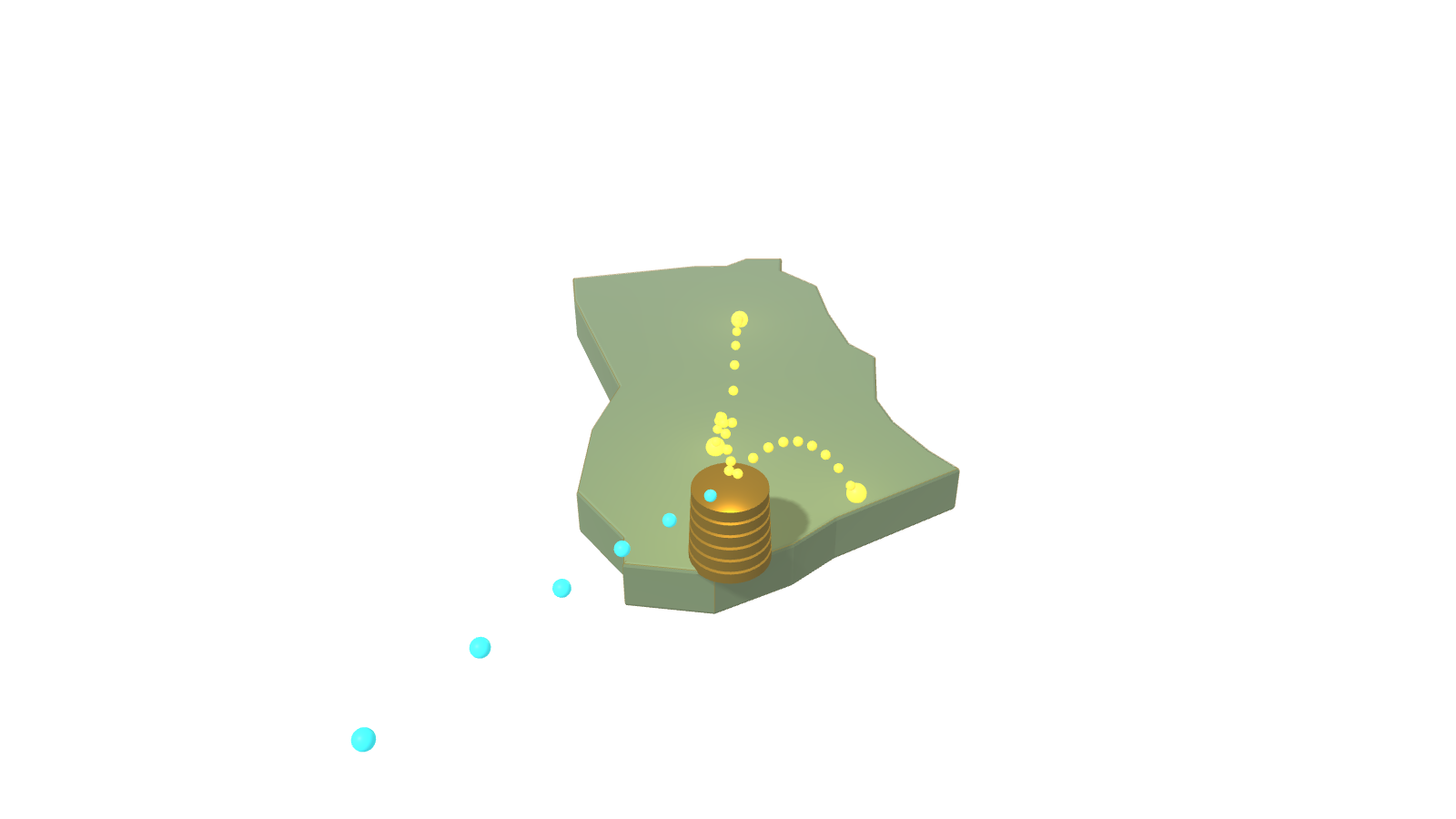
Ghana is doing the responsible thing. We are saving at the central bank, ring-fenced, towards retiring our mature offshore infrastructure by around 2035 — Jubilee, TEN, Sankofa. On the trajectory set out in the fund agreements, that pot is meant to grow towards a billion dollars.
That is good fiscal discipline. But is that all we can do?
Because if all we do is save, then in 2035 we write one enormous cheque to foreign vessel owners and watch it sail over the horizon. Aberdeen, Houston and Singapore will thank us for our discipline.
We have ten years. In that time there are four harder conversations we need to have — and they need to start now, not in 2032 when the vessels are already on their way.
1. Local content — who gets the money?
Decommissioning is not just cutting steel. It is more than two hundred job types: marine biologists, ROV pilots, well plug-and-abandonment engineers, NORM handlers, onshore recycling crews. Under L.I. 2204, can we map exactly which scopes Ghanaians can take if we start building capacity today? Norway made this a deliberate policy and keeps the large majority of its decommissioning spend at home. What is Ghana’s target?
2. Skills — who will do the work?
We have ten years to create the workforce. Can KNUST, UMaT and the Regional Maritime University start a decommissioning MSc in 2026? Not in 2032, when the campaign is already being tendered. We need welders certified for offshore decommissioning work, not just general welders.
3. Vessels — the scarcest resource in the game
The heavy construction and lifting vessels this work depends on are few, and everyone will want them in the same years. In 2033–2035 the UK, Nigeria and Angola will be bidding for the same tonnage we are. Wait until then and we pay the priority rate; negotiate early, and as a bloc, and we pay something far closer to the base rate. Can we start locking in slots now?
4. Synergy — one Ghana, one campaign
Can we synchronise the Jubilee, TEN, Sankofa and OCTP schedules into one Ghana decommissioning campaign, so a vessel mobilises out of Takoradi once and works four fields? Shared mobilisation is one of the biggest cost levers in this industry. Right now, each operator plans alone.
Why the register matters
You cannot answer any of these four questions without data. The register tells us what we actually have to decommission — not the as-built drawings from 2008, but live position and condition today. It tells us when each asset will be ready, so campaigns can be synchronised. It tells us which skills and vessels the work needs, so the universities can train and GNPC can negotiate. And it tells us who can do it locally, so the money does not have to leave.
| Save to spend | Save to build |
|---|---|
| One cheque in 2035 to foreign contractors and vessel owners | Ten years of preparing Ghanaian firms to win defined scopes |
| Skills imported for the campaign, gone when it ends | A decommissioning MSc and certifications started in 2026, a workforce that exports itself afterwards |
| Vessels chartered at priority rates in a seller’s market | Slots negotiated early, as one national campaign |
| Four operators, four separate mobilisations | One campaign out of Takoradi covering four fields |
| No register — every bid priced against uncertainty | A live register — every bid priced against evidence |
At Enatlas we believe a decommissioning register, properly designed and hosted with Ghana’s own institutions, turns a billion-dollar liability into Ghana’s next local content story.
The fund protects our future. The register builds it.
Emmanuel Sampson is the founder of Enatlas and is studying for a master's degree in subsea engineering at the University of Aberdeen.